Skip to content

Tagmortgage

Ask the mortgage expert: how Canada’s self-employed can unlock homeownership

For too long, Canada’s self-employed have faced a maddening paradox. The very financial strategies that prove your business savvy—like maximizing deductions to lower your taxable income—often become the biggest roadblocks to securing a mortgage.

As a mortgage broker, I see this scenario play out every week. I meet brilliant entrepreneurs, skilled contractors, and creative freelancers who have thriving businesses and excellent cash flow. Yet, they get turned away by traditional lenders fixated on a single line on a tax return. The story is always the same: “My business is having its best year ever, but the bank says I don’t make enough money.”

If this sounds familiar, take heart. The landscape has changed. Lenders and mortgage insurers now recognize the unique financial reality of the self-employed. A new generation of intelligent mortgage products has arrived, designed to look beyond your declared income and see the true financial strength of your business. The T4 slip is no longer the only golden ticket to homeownership. Continue Reading…

I hope you will enjoy this article and if you have any questions or would like to discuss I am always available.

Your best interest is my only interest. I reply to all questions and I welcome your comments. Like this article? Share with a friend.

Steve Garganis: 416-224-0114; steve@canadamortgagenews.

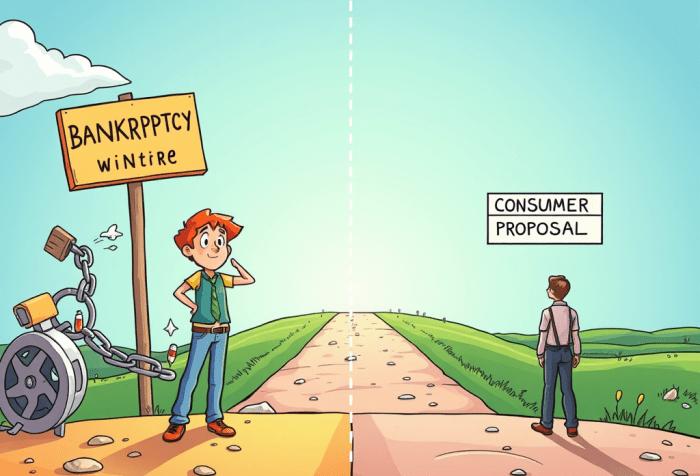
The speed Discharge: Bankruptcy wins over Consumer proposal

In the world of debt relief, two primary options often come to mind: consumer proposals and bankruptcy. While both offer a path to financial freedom, they differ significantly in their implications and long-term effects. This article will argue why bankruptcy, despite its daunting reputation, can often be a more advantageous solution than a consumer proposal for individuals seeking to reestablish their financial footing.

When you’re drowning in debt, the idea of a “consumer proposal” sounds like a gentle breeze, a reasonable compromise. You offer your creditors a portion of what you owe, they agree, and you embark on a multi-year repayment plan. It feels less drastic, less shameful, than declaring bankruptcy. But let’s pull back the curtain on that seemingly gentler option, because from where I’m standing, a consumer proposal often leaves you in financial limbo far longer than the “nuclear option” of bankruptcy.

Continue reading “The speed Discharge: Bankruptcy wins over Consumer proposal”

Refinance today before you can’t tomorrow

Alright, let’s talk mortgages. Because right now, for a lot of Canadians, that word “mortgage” isn’t exactly synonymous with “sweet dreams and financial freedom.” No, for far too many, it’s becoming a four-letter word that brings with it a whole lot of anxiety.

I’ve been in this business a long time, seen a lot of market cycles. But what we’re witnessing today is something else entirely. The sheer volume of people hitting their mortgage renewal dates with rates dramatically higher than what they signed up for just a few years back? It’s unprecedented. The “payment shock” isn’t just a buzzword; it’s a gut punch for a massive percentage of Canadian households.

Think back to 2020, 2021. Interest rates were practically giving money away. We saw fixed rates dipping below 2%, variable rates even lower. People bought homes, stretched their budgets, maybe even consolidated a little bit of debt with that sweet low-rate mortgage. Life was good, financially speaking.

Continue reading “Refinance today before you can’t tomorrow”

Ask the Expert: Steve Garganis – What’s your Canadian mortgage strategy in Trump’s tariff war?

Make no mistake, we are in a war — an economic war. President Donald Trump has threatened, imposed, or temporarily reversed tariffs on just about every country in the world, including Canada.

Canada will now see a 25% tariff on aluminum, steel, Canadian automobiles and non-CUSMA-compliant traded goods.

The U.S. accounts for 75% of all Canada’s exports. As much we want to tough it out, some Canadians will find it tougher than others. Layoffs and job losses have already begun. My office has been contacted by clients asking for help after being laid off.

There’s no point in sugar-coating it: We’re in for a bit of a rough ride. But there are some things you can do to come out of this all right.

Does bad news for the economy mean good news for your mortgage rate?

Negative economic news has been rolling out over the past several weeks, such as inflation increasing to 2.6% in February from 1.9% in January, and the unemployment rate increasing to 6.7% over the same period, leaving another 36,000 people without a job. At this point, we have to stand back and look at what this means for interest rates and the housing market. Read more – Interview with Steve

I hope you will enjoy this article and if you have any questions or would like to discuss I am always available.

Your best interest is my only interest. I reply to all questions and I welcome your comments. Like this article? Share with a friend.

Steve Garganis: 416-224-0114; steve@canadamortgagenews.

A Financial Crisis Or Is It?

2025 will go down in history as one of those years filled with volatility and turmoil. There’s a quote from a book I read that seems appropriate today. “People want certainty versus accuracy.”  I hope to give you certainty by sharing my 36 year experience in financial services and having lived through 5 financial crises and living through a 6th crisis today.  

I’m going to take a risk and speak very bluntly.  This may anger or upset some of you. I apologize, I have to say some things. I have to point out the obvious.   

FIRST THE BAD NEWS…

I’m a math guy. Work with numbers every day. The stats don’t lie. Our economy, GDP, cost of living, housing costs, have all gone into the toilet.  You don’t need to look very far to believe this. Many of you have contacted me about job losses, or potential job losses.  Those secure in their jobs call me because they have increased their debt levels and this can be for many reasons.  The point is, many are having a hard time paying their debts.  

Continue reading “A Financial Crisis Or Is It?”