
Skip to content

CategoryMortgage Tips

Bridge loans explained… your bank hates them but they are extremely useful

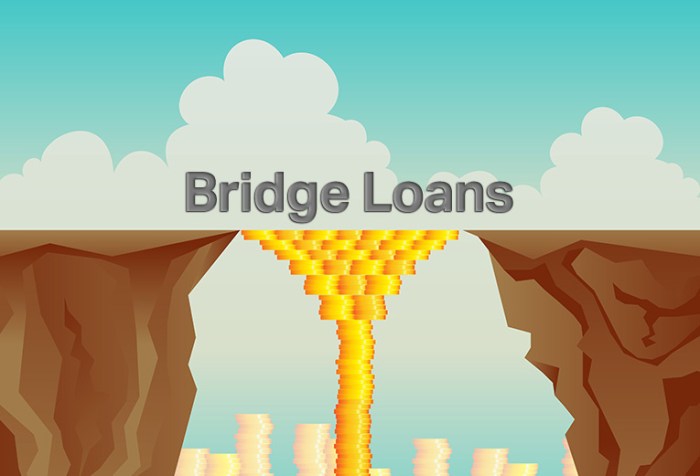
bridge-loansBridge loans are short-term loans that bridge the gap between two different closing dates.  More commonly used when an existing homeowner sells their home, and buys another home, with two different closing dates.   But bridge loans have become a very popular way to take possession of that new home while it’s empty for 2 or 3 weeks to allow for renos.   Best of all, it’s really inexpensive!

THE OLD WAY

In the past, most homebuyers would have their selling and buying dates match.   It’s always been a bit of a juggling act as you have to pack your moving truck and unpack it, all in less than a day.   Somehow, everyone manages to get it done… but you talk about one of the most stressful days in your life….moving ranks right up there!   Throw in some kids, maybe a dog, and a house full of stuff and you have a real chore on your hands….

THE NEW WAY… Continue reading “Bridge loans explained… your bank hates them but they are extremely useful”

Mortgage tricks… and treats!

halloween-moneyHappy Halloween! And before the kids knock on your door.. just thought I’d send a quick mortgage trick and trick..

TRICK..  ‘Stress Test’ for mortgage qualifying.  The Finance Minister, Bill Morneau, blindsided Canadian Banks, Financial Experts and consumers when the govt introduced mortgage rules making qualifying even tougher.  The new rules mean consumers must qualify at the posted bank 5 year fixed rate.

TREAT... The reality of the new mortgage rules is that it’s not going to affect that many.  One of Canada’s biggest mortgage lenders told me, confidentially, that over 95% of their portfolio would easily pass the new stress test.  The REAL devil here is the Canadian Press.  Unfortunately, they are making this latest change sound like a death-blow for the real estate market.  Gauging my own clients profiles, I would say that even fewer than 5% would be affected.

If you’ve followed my site, you’ll know I’m a huge Variable rate advocate.  More than 90% of my clients have been in a Variable rate product.  And guess what?  They’ve always been able to qualify using the posted 5 yr fixed rate.

The govt wants to slow the housing market and property value increases.  I agree, we don’t want to see house prices continue unsustainable increases.   Not sure this latest change is the correct move.  Perhaps, this rule could have apply for higher priced homes only..?   Exclude homes less than $600k or $700k? Just a thought..   I’m also unsure the lack consultation or input from industry experts, was a wise move.  More open discussion is needed.  Just my opinion..

Happy Halloween.

Your best interest is my only interest.   I reply to all questions and I welcome your comments.  Like this article?  Share with a friend.

Steve Garganis 416 224 0114 steve@mortgagenow.ca

Mortgage brief…Is it worth changing your mortgage today?

Fixed rate mortgageMortgage rates have never been lower.  Should you break your current mortgage to take advantage of the lower rates?   The answer is ‘yes’ and ‘no’.

YES….if the penalty to break your mortgage is less than the potential savings.  We are seeing many opportunities today where it PAYS to break your mortgage and get into today’s lower rates.

EXAMPLE for one client..  Existing mortgage is $275,000.  The existing rate is 2.99% with 3 years to go.  The penalty to exit is $3500.  The current 3 year rate is 2.24%.  Gross savings is $5602.  Net savings is $2102.

NO… if the penalty to break your mortgage is less than the potential savings.   EXAMPLE..  Penalty is $6500 and Gross savings is $5602.  Net loss is $898.

YES… if you think interest rates are going to be much higher in the next few years, you may still want to bite the bullet, pay the penalty and lock into a longer term fixed rate mortgage.   Everyone is different and has different needs, risk tolerances, plans.  This is a personal choice.

I’ve seen examples of both situations.  You could save money by breaking your mortgage.  The best advice is to speak with an experienced Mortgage Broker. Get an UNBIASED opinion.

Your best interest is my only interest.   I reply to all questions and I welcome your comments.  Like this article?  Share with a friend.

Steve Garganis 416 224 0114 steve@mortgagenow.ca


Tax Free Savings Accounts should be 2nd on your list

There are over 10million TFSA accounts in Canada according to this article in the Financial Post.   Wow, it’s great to see that level of savings….

But hold on…..is this the right strategy for those of us with a mortgage?    Well, if you have a mortgage on your principal residence and the interest is not tax-deductible, then I think it’s NOT the right strategy.

For most of us, the interest on a residential mortgage is not tax deductible (I say for most of us because if you rent out part of the home or use it for your business then you may be able to claim a tax deduction).

Take those after-tax $$dollars and pay your mortgage first before putting them into a TFSA… reduce the amount of non-deductible debt and then focus on a TFSA….   If you own an investment property, then this strategy may vary slightly…. but for most of us, let’s get rid of that mortgage first…

And yeah, for those higher income earners looking to diversify, then sure.. A TFSA makes sense.  But for most Canadians, I would suggest getting rid of the mortgage is a better strategy.

Your best interest is my only interest.   I reply to all questions and I welcome your comments.  Like this article?  Share with a friend.

Steve Garganis 416 224 0114 steve@mortgagenow.ca

Short term fixed products are still in…

SHORT TERM RATES ARE STILL IN

A few months ago, I said Variable was out, Fixed rates were in.   I recommended going with a short-term fixed rate products.  The reasons are simple:

  • You can get the same or better in a 2 and 3 yr fixed rate term.  That eliminates the Variable rate for me.
  • 2 yr is 2.19% and 3 yr is 2.29%.
  • Variable is 2.30% today.  Why choose a fluctuating rate when you can get a guaranteed better rate for the next few years?
  • I also don’t like the current Variable rate pricing that’s out there.
  • Prime less 0.40% isn’t good enough.. I like to see Prime less 0.50% or better.

Historically, we’ve always done better by choosing short-term rates.  And that’s what Variable rates are…A mortgage product priced from short-term funds.  The only difference today, is that it makes more sense to lock into 2 or 3 yr fixed term vs choosing a Variable rate.

WARNING

( you’ll see lower rates advertised.. but be careful.  There are so many NO FRILLS products or products that carry inflated penalty calculations, limited repayment options and other hidden fees.. stay away from those)

MORTGAGE TIP

Hey, want to know which Mortgage Advisor to use?  Check out their historical recommendations and forecasts.  That should tell you all you need to know about that advisor.   And if you can’t readily find those historical forecasts, then walk away and look elsewhere.

Your best interest is my only interest.   I reply to all questions and I welcome your comments.  Like this article?  Share with a friend.

Steve Garganis 416 224 0114 steve@mortgagenow.ca