Skip to content

Bank of Canada suggests rate hikes soon…

The Bank of Canada met on Tuesday for the 3rd of eight scheduled meetings this year to set the Bank of Canada rate.  As expected, no rate change… But there were some language in the meeting that suggests we could start to see rates go up as early as this year…. here’s an article from The Star and reaction from TD’s Economist.

In short, it appears and I stress the word, appears, as though Mr. Carney is warning us that interest rates will be rising sometime soon.   But Economists aren’t buying into that warning just yet.   There is still too much uncertainly about the global, U.S. and domestic economies.    And as long as these concerns persist, then interest rates should remain low.

SOME EXPERTS DON’T BELIEVE ALL THE DOOM AND GLOOM STORIES

It’s true, we have experienced emergency interest rates for over 3 years now…  It’s no secret the govt is concerned about Canadians get into too much debt.  You’ve heard the figures.  The average Canadians owes around 153% of their annual income…. concerns about a housing bubble.   But how does that compare with the rest of the world?  Here’s an interesting article from the Financial Post’s Andrew Coyne, which says there are other countries that carry 200% and 300% of their annual income in personal debt… there doesn’t seem to be the level of concern about their economies.  So why are we in such a panic?

It appears we are at a point where rates could go up but a lot of things would have to fall into place before that happens… it could take 6, 9 months or even a few years before that happens… maybe longer…?   Any rate increase is sure to be slow….  Don’t panic… if you see an opportunity where you can benefit from these low rates, then act on it… don’t let the media scare you into inaction or lack of action…..

And as always, speak with a professional that can discuss and explain the different mortgage products and trends… make an informed choice.

Flaherty is, isn’t, is, isn’t changing mortgage rules?

So which report do you want to believe….?  2 separate reports… both from April 10, 2012.     We have Reuter’s reporting that Canada’s Finance Minister Flaherty, isn’t making any changes to mortgage rules….  Click here for their report.   Here’s a quote from the article “I have no present plans to intervene in the housing market in Canada,” Flaherty told reporters in New York.

And here’s another report from Bloomberg.com entitled “Flaherty Says He’s Planning Changes on CMHC Rules.” Click here for their report.   Are you confused yet?    Well, you’re not alone.   The mixed messages are everywhere today.   Bank of Canada Carney warning about record high Personal Debt Levels…. you’ve seen this one, I’m sure.   We have too much personal debt… and then another report says Canadians are ready to tackle their debt level… and yet another one that say the economy is very fragile and is at risk of slowing down…

It’s hard to know which report is correct.   One thing is certain… today’s mortgage rates are at historical lows.   The govt and the BANKS don’t want them to last.     If you have a house and some debt, or if you are considering buying a house, then why wouldn’t you take advantage of these low rates…?   I’m NOT saying to go out and borrow more money for a TV or new car or other luxury items…  If you have high interest debt, or higher interest debt than today’s 3.00%+ interest rates, then take action and restructure your finances…   Today’s record low rates won’t last…  You can still benefit from these historically low interest rates.


A change of strategy… Fixed rates… 5yr or 10 yr?

For years, I have recommended Variable rate mortgages over Fixed rates.   The reasons are simple:

  • Variable rate outperformed Fixed rates in over 88% of the time.
  • You could lock into a Fixed rate at anytime should interest rates go up.
  • you could exit the product at anytime with a maximum 3 month interest rate penalty (compared with Interest Rate Differential penalties for Fixed rates that vary depending on current rates.. we’ve seen 10, 14, 16 and even 20 months interest penalties charged in recent years).
  • If you were in a Variable rate the last 5 years, then you have enjoyed an average rate of around 2.92% compared with a 4.37% fixed rate (annual average rate over last 5 yrs).    It’s been the least expensive way to own your home…  (my clients have saved between 1.45% and 3.00% per year on their mortgages over the past 5 years based on my recommendation).

But then, in August 2011, the Banks caught on.  They decided they wouldn’t offer those great Variable Rates or Prime less 0.75% (3.00% less 0.75% = 2.25%).  They all raised the price on new Variable rate mortgages to Prime less 0.00%.    And this year we have seen 5 year fixed rates hover at around 3.19% to 3.39%…  10 year fixed has also come down to 3.99% and 3.94%.

So what’s the strategy today?  What’s the least expensive way to own your home?     Here are some answers…

If you have Prime less 0.50%  or better, then considering sticking with it.

The fact is, over 80% of my clients are in a Variable rate mortgage of Prime less 0.50% or better.   They have enjoyed huge savings, especially over the last 5 years. I’m not too anxious to have them start paying a higher rate….. Instead of locking into a 5 or 10 yr Fixed rate, why not set your Variable rate payment based on the higher Fixed rates…  You’ll pay more towards principal and pay the mortgage off faster.

If you’re getting a new mortgage or your mortgage is coming up for renewal, then I would consider a Fixed rate term..

This might shock many of my clients and regular readers, but I can’t recommend taking a new 5 year Variable rate based on today’s pricing…  It’s time to look at Fixed rates…  The term will depend on your own personal situation, goals and needs.   5 year fixed (currently 3.29%) is looking like a good choice for many today… But a 1 year fixed (2.89%) might also we a good choice…   One product that is attracting more attention is the 10 year fixed rate (3.89% to 3.94%)… It’s never been under 4.00%… so many people are recommending it… But I’m not so sure about it…. After all, if you were to pay this mortgage out before the first 5 years, you would be faced with a monster penalty!   10, 14, 18 months worth of interest … maybe more…  On the positive side, if you paid the mortgage out after 5 years, the penalty is capped at 3 months interest.

If we compare the 5 yr fixed vs the 10 yr fixed, we can look at a number of different scenarios… but here’s a really simple one to look at…The question is, how much will rates have to increase by in order for you to be further ahead?

If you took a 5 yr fixed rate today at 3.29% but set your payments based on today’s 10 yr fixed of 3.94%, then at the end of the first 5 years, you would have to renew at a rate of 4.75% or higher, before you start to win with a 10 yr fixed rate.     So this is where the unknown comes in to play…  and the unknown can cause fear and panic…     But it can also mean opportunity…  Will interest rates be 2.00% higher than they are today??   Will Variable rate pricing come back to normal and again be the product of choice?  Will there be a new product that is even better than today?    I don’t know the answer… but I think 10 years is just too long of a term to commit to…Things change faster today…   Can we really make plans for 10 yrs?  Remember, if we need to refinance or sell, there is mortgage penalty to deal with….this can blow the savings right out the window…  A lot of what if’s…    I’d probably stick with 5 yr fixed today or go shorter term…

A last thought and point of reflection..

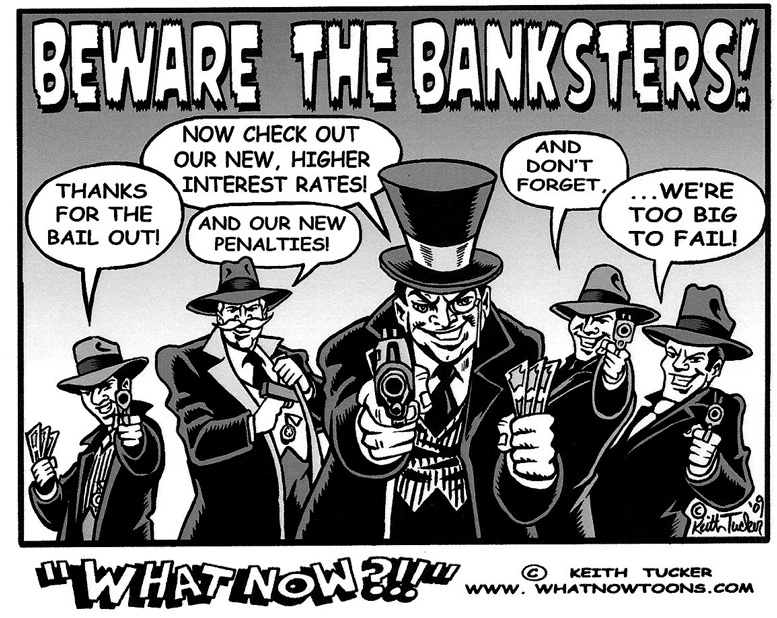
Interest rates have remained below average for the last 10 years…  They have been at record lows over the past 4 years due to the US sub-prime mortgage crisis and the longer than expected global and US economic recovery…..  Interest rates are expected to go up…  the big question is, when??   Regardless of the answer, shorter terms have ALWAYS been a better choice when it comes to mortgages… don’t be so quick to jump into a 5 or 10 year fixed rate… speak with your mortgage broker and get some advice.   Banks want borrowers to be afraid.. they want you to remain unsure…  They want you to lock into the longest term possible because this is where they earn the most $$profit….   Don’t be so quick to contribute the Bank’s profit margin….

Govt to cut Secured lines of credit to 65% loan to value…

Thursday’s speech by OSFI head, Julie Dickson, at the Toronto Board of Trade, indicates it’s a done deal.  Secured lines of Credit will be capped to a maximum 65% of the value of your home.  “…the guideline does set out some firm rules that all institutions will need to adhere to – specifically that home equity lines of credit – or HELOCS – can have a loan to value ratio no greater than 65%….”

WE’RE MAKING SOME CHANGES…. I MEAN, WE ARE PROPOSING SOME CHANGES…

It was only a few weeks ago that OSFI issued a Draft B-20 guideline, a guideline that is filled with radical changes to mortgage lending rules and policies.    It was supposed to be up for discussion, with a May 1st deadline…. So much for discussion…. it appears the decision was made already according to Ms. Dickson’s speech today…. here’s a copy of that speech… April 5 2012 remarks by Julie Dickson.

90%, 80% AND NOW 65%???… WHEN DOES IT END?

Remember 2007?  It was just a few years ago that CMHC was offering 100% loan to value, interest only payment mortgages.  Back then it was good to borrow at these levels…. And HELOC’s could be had for up to 90% LTV.  Over the past few years, the govt has tightened up mortgage rules in an attempt to reduce access to credit.    Mortgages were amortized for 40 years, then cut back to 35 and now 30 years..  But now the govt believes they need to step in again and limit access to your equity by reducing the Loan to Value limit to just 65%….   I looked back to some historical lending policies and couldn’t find a time when the govt ever imposed a limit of just 65%.   It is unheard of! And it’s going to have a big effect.

SO WHAT’S THE PROBLEM?

OSFI is finding a solution to a problem that doesn’t exist.   I don’t think they realize that Banks have pushed borrowers into lines of credit for years now, as a way of providing easier access to the equity in their homes.    Canadians aren’t buying new TVs or new cars or other luxury items… they are using the equity to improve their net worth by buying investments.   Why is this a bad thing?   Are our defaults up?  NO!  Then what is the problem….?

WHO WILL THIS AFFECT AND HOW?

If you are a self-employed person and ever tried to get a business loan from the Bank, then you know how difficult it can be to get an approval… but even if you do, the repayment terms and interest costs could be a hard stop.   End result is that business idea could remain just that… an idea that never got launched.   One of the more popular alternatives was to access cheap money by borrowing, against the equity in your home.  Mortgages can be great but if you need to borrow, repay and borrow again, then a mortgage can have costly registration fees and penalties.  But through a HELOC,  the repayment terms are great and it’s also a much lower rate of interest than any business credit facility.

Borrowing to invest isn’t anything new.  A HELOC allows you to access YOUR equity at preferred rates.   How about buying a second home or a rental property?  You could use the equity in your home to help with the purchase and HELOCs give a separate accounting which makes reporting to Revcan much easier.

How about borrowing for your child’s education?   Are we going to force Canadians to refinance their mortgages in order access cheap money?   I’m sure the BIG SIX Banks will love to see you break your mortgage and pay their infamous penalties.

END RESULT

Get ready, because you are about to see us pushed into higher interest, unsecured lines of credit (oh yeah, there wasn’t any mention of reviewing these lending policies… that’s because NONE exist!).

Which debt would you pay last…. a mortgage, a secured line of credit or a credit card or unsecured line of credit?    Obviously, it’s the unsecured debts would be last on our list… we will always pay for the roof over our heads…. which is why the defaults are still very low and within very acceptable levels.

We are going to see many Canadians discouraged from investing.. they won’t want to go through the trouble of borrowing with a mortgage…  Congratulations OSFI, you’ve made borrowing more expensive….you’ve made investing for our future tougher than it has to be.

The WINNERS… the BANK…. The LOSERS… you and me, the average Canadian…!

Mortgage wars end?…only for the BIG SIX Banks…

March 29th, 2012 is going to be remembered as the day when the BIG SIX Banks ended their Mortgage War.   Well, at least for now.  Rates are up around 0.50% at Retail Branches of the BIG SIX  Banks.  (don’t worry, Mortgage Broker rates haven’t gone up that much and are lower than any of the so-called discounted or special rates advertised by the BIG SIX Banks.)

In what was an unprecedented, public fight for your mortgage, the BIG SIX Banks pulled down their pants and showed how low they can really go with their rates.   We saw BMO come out with their 2.99% NO FRILLS mortgage… ( a product we wouldn’t recommend to anyone due to it’s restrictions, limitations and penalty calculations).    Unfortunately, too many borrowers don’t look beyond the rate and have signed on for this product..   They will have to deal with the consequences in the years to come.

RBC fired back with a pretty good rate of 2.99% for 4 years… It didn’t have the restrictions or limitations but it still had that unfair penalty calculation.   RBC also took some public shots at the BMO product, through the media and their own website.   It was great to see some real competition take place among our BIG BANKS.    There is always a winner in this war.   You the borrower.

TD, Scotiabank, National Bank and CIBC all followed with a similar 4 year fixed rate at 2.99%.   But they still had that same penalty calculation formula I absolutely don’t like.

Canadian lenders appear to be extremely slow to pass on changes in the Bank Rate to their customers.”  Anyone remember that quote?  That’s a direct quote from the Bank of Canada review entitled ‘Competition in the Canadian Mortgage Market’.

Here’s another one from the same report “borrowers who use a mortgage broker pay less, on average, than borrowers who negotiate with lenders directly”.

The good news about all this rate war stuff is that we saw even better mortgage products being offered through the Mortgage Broker channel.  Remember these quotes the next time you are shopping for a mortgage.