Skip to content

TagFinance

The speed Discharge: Bankruptcy wins over Consumer proposal

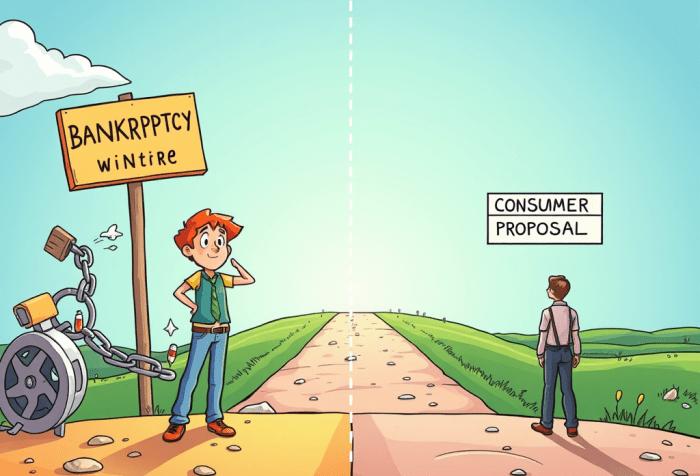
In the world of debt relief, two primary options often come to mind: consumer proposals and bankruptcy. While both offer a path to financial freedom, they differ significantly in their implications and long-term effects. This article will argue why bankruptcy, despite its daunting reputation, can often be a more advantageous solution than a consumer proposal for individuals seeking to reestablish their financial footing.

When you’re drowning in debt, the idea of a “consumer proposal” sounds like a gentle breeze, a reasonable compromise. You offer your creditors a portion of what you owe, they agree, and you embark on a multi-year repayment plan. It feels less drastic, less shameful, than declaring bankruptcy. But let’s pull back the curtain on that seemingly gentler option, because from where I’m standing, a consumer proposal often leaves you in financial limbo far longer than the “nuclear option” of bankruptcy.

Continue reading “The speed Discharge: Bankruptcy wins over Consumer proposal”

Ask the Mortgage Expert: Why this could be your window of opportunity into Canadian real estate

The Canadian real estate market, as we all know, has been a rollercoaster. We’ve seen the highs, the wild bidding wars, and then the cooling period as interest rates climbed. But here we are, in July 2025. I’m here to tell you that for the savvy buyer, today might just be that sweet spot you’ve been waiting for.

You’ve heard the chatter: “overvalued,” “affordability crisis,” “wait for prices to drop.” And sure, even cutting through the noise, if you’re expecting a 2021-style market frenzy, you’ll be disappointed.

But short of that, here are reasons why now presents a unique window of opportunity.

Interest rates are stabilizing (and perhaps declining)

We’ve seen the Bank of Canada make big moves over the years. But while we’re not back to rock-bottom rates, the aggressive hikes are behind us. The market is adjusting to a new reality.

What does that mean for you?

First, there’s less uncertainty around your mortgage payments. And with some economists forecasting further modest rate cuts through 2025 and 2026, locking in a rate now – or considering a variable option – could put you in a very strong position as borrowing costs potentially ease further.

This is a far cry from the rapidly escalating rates we battled just a year or two ago.

Plus, if the Bank of Canada continues to pause or cut rates, as many expect it will (with forecasts suggesting the policy rate could reach 2.25% by the end of 2025), your monthly payments on a variable rate mortgage will decrease.

This isn’t just about saving a few bucks; it’s about saving potentially hundreds or even thousands of dollars in interest over your mortgage term, with more of your payments going towards the principal.

Historically, variable rates have outperformed fixed rates over a full mortgage cycle. While we can’t predict the future with 100% certainty, the current economic tea leaves strongly suggest we’re moving into an “easing phase.” This means that the risk of rates suddenly skyrocketing is significantly lower than it was a couple of years ago.

A more balanced market (in many regions)

Forget the desperate bidding wars of yesteryear.

In many parts of Canada — particularly in the historically hot markets of Ontario and British Columbia — we’re seeing increased inventory. This isn’t a collapse; it’s a normalization.

More listings mean more choice for buyers, and critically, more negotiating power. You’re no longer fighting tooth and nail against a dozen other offers. Continue Reading…

I hope you will enjoy this article and if you have any questions or would like to discuss I am always available.

Your best interest is my only interest. I reply to all questions and I welcome your comments. Like this article? Share with a friend.

Steve Garganis: 416-224-0114; steve@canadamortgagenews.

A Financial Crisis Or Is It?

2025 will go down in history as one of those years filled with volatility and turmoil. There’s a quote from a book I read that seems appropriate today. “People want certainty versus accuracy.”  I hope to give you certainty by sharing my 36 year experience in financial services and having lived through 5 financial crises and living through a 6th crisis today.  

I’m going to take a risk and speak very bluntly.  This may anger or upset some of you. I apologize, I have to say some things. I have to point out the obvious.   

FIRST THE BAD NEWS…

I’m a math guy. Work with numbers every day. The stats don’t lie. Our economy, GDP, cost of living, housing costs, have all gone into the toilet.  You don’t need to look very far to believe this. Many of you have contacted me about job losses, or potential job losses.  Those secure in their jobs call me because they have increased their debt levels and this can be for many reasons.  The point is, many are having a hard time paying their debts.  

Continue reading “A Financial Crisis Or Is It?”

Tariffs Up but Mortgage Rates Down

 A quick note… we’ve all heard about the Trump Tariffs. It will make everything more expensive. Canada and also in the USA. It will put people’s jobs at risk, we are likely to see layoffs, and economists are forecasting for a recession. This is if the tariffs do go through and continue for over a month.

Now that I’ve cheered you up, here’s the good news. And there is some.  Mortgage rates are headed lower. Fixed rates and variable rates. The old rule of bad economic news brings lower interest rates is true. A few things to point out about How interest rates are calculated.

Continue reading “Tariffs Up but Mortgage Rates Down”

New $1.5 million price cap, 30 year extended amortization.. Is it enough?

The Federal Government announced they would be extending the current amortization on insured mortgages (those buying with less than 20% down) to 30 years.  ONLY if you are a First-time buyer or you are buying a newly built home. I applaud this move but I would have liked for these 2 limitations to have been excluded. 

I would go further and say we should extend it to 35 or 40 years, maybe even 50 years!

Continue reading “New $1.5 million price cap, 30 year extended amortization.. Is it enough?”